
Introduction
Airports manage enormous volumes of passenger movement every day. Even small increases in foot traffic can quickly lead to longer queues, congestion, and operational strain across terminals. As passenger expectations rise and airport operations become more complex, relying on manual observation or static reporting is no longer sufficient.
To operate efficiently, airports need real-time and predictive visibility into how passengers move through terminals. This is where CONDOR, Cognistic’s Vision AI–powered passenger flow analytics platform, enables a fundamental shift—transforming raw movement data into actionable operational intelligence that helps airports anticipate congestion, optimize resources, and improve passenger experience.
Understanding Passenger Behavior with Vision AI
Passenger movement within an airport is highly dynamic. Peaks occur during early departures, late arrivals, irregular operations, and unexpected delays. Traditional monitoring methods often detect congestion only after it forms, limiting the ability to intervene effectively.
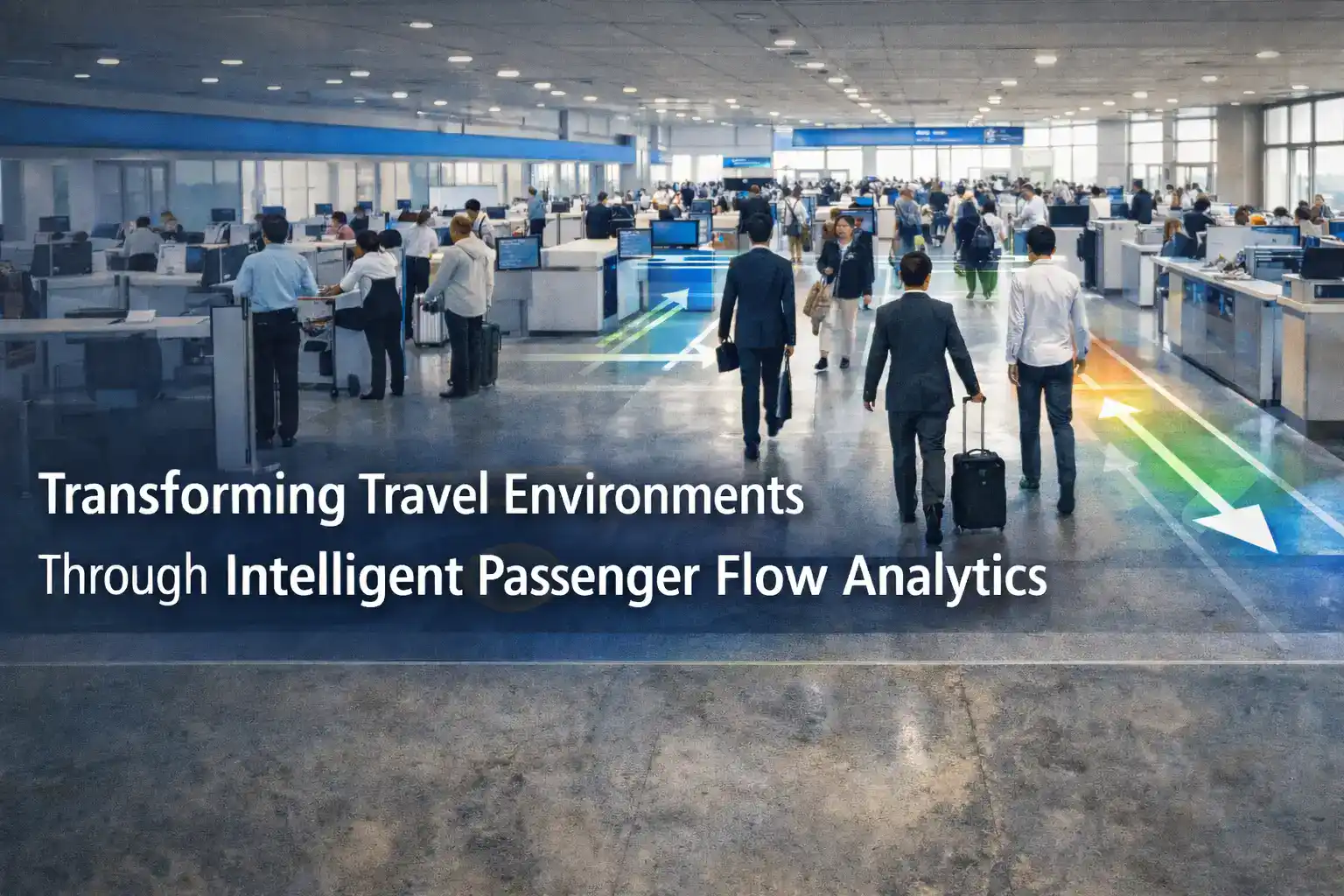
CONDOR continuously analyzes passenger density, movement speed, directionality, and dwell time across key terminal areas such as security checkpoints, boarding gates, arrivals halls, and corridors. By converting live camera feeds into structured data, CONDOR provides airport teams with a clear, real-time understanding of how crowds form and disperse throughout the day.
This intelligence goes beyond basic counting. It reveals behavioral patterns that help operators understand where, when, and why congestion emerges enabling proactive, informed decision-making.
Why Predicting Congestion Matters
Congestion impacts far more than passenger comfort. It directly affects service quality, staffing efficiency, security throughput, and on-time performance. When crowd buildup is detected too late, teams are forced into reactive measures that disrupt operations.
CONDOR enables early detection and prediction of congestion by identifying flow imbalances before queues reach critical levels. With real-time insights into occupancy and movement trends, airport teams can pinpoint pressure points—such as undersized security lanes or overloaded entrances and intervene early.
The result is smoother passenger flow, more predictable wait times, and fewer operational disruptions, creating a calmer and more controlled terminal environment.
Supporting Terminal Staff with Actionable Intelligence
Airport operations depend on fast, coordinated decisions. CONDOR provides role-specific, real-time alerts and dashboards that guide staff toward areas requiring immediate attention.
When congestion begins to form, teams can:
- Open additional service counters
- Rebalance queue layouts
- Redirect passengers to less crowded areas
Rather than reacting to visible overcrowding, staff act based on live data and predictive insights, reducing stress and preventing bottlenecks before they escalate.
Improving Passenger Safety Through Crowd Awareness
Passenger safety in airports is closely tied to crowd density and flow control. Overcrowded spaces increase the risk of disorder, delays, and unsafe conditions.
CONDOR enhances crowd safety by continuously monitoring occupancy levels and movement patterns. When density exceeds safe thresholds or abnormal buildup occurs, the system alerts operations teams so corrective action can be taken immediately. This ensures safety is maintained without disrupting the passenger experience or relying on intrusive measures.
Importantly, CONDOR operates with privacy by design—no smartphones, wearables, or biometric identification are required.
Enhancing the End-to-End Passenger Journey
A well-managed airport feels intuitive and predictable. Shorter waits, clear movement paths, and balanced flows all contribute to passenger confidence and satisfaction.
By optimizing passenger flow across every stage of the journey, CONDOR helps airports reduce dwell time, improve throughput, and create a more seamless travel experience. Passengers spend less time waiting and more time engaging with airport services, while operators benefit from improved efficiency and consistency.
As global travel continues to grow, this level of flow intelligence becomes essential for scaling operations without sacrificing experience or control.
Final Thought
Modern airports operate as complex ecosystems where movement intelligence is critical to performance. By understanding how passengers flow through terminals airports can reduce congestion, improve safety, and deliver more reliable operations.
CONDOR enables this transformation by turning passenger movement into predictive, actionable intelligence. With Vision AI at its core, Cognistic continues to empower airports with the clarity and control needed to operate efficiently, adapt dynamically, and deliver better experiences at scale.
Frequently Asked Questions (FAQs)
- How does CONDOR help airports manage crowds more effectively?
CONDOR analyzes passenger density, movement speed, and flow patterns in real time to predict congestion and support proactive operational decisions.
- Can CONDOR reduce wait times at security and checkpoints?
Yes. By identifying early bottlenecks, CONDOR enables staff to rebalance queues, open additional lanes, and optimize throughput.
- Does CONDOR support passenger safety?
Yes. Continuous crowd monitoring helps maintain safe occupancy levels and prevents overcrowding without disrupting passenger movement.
- Does CONDOR require major infrastructure changes?
No. CONDOR integrates with existing camera infrastructure, enabling efficient deployment with minimal disruption.
- How does CONDOR protect passenger privacy?
CONDOR uses Vision AI analytics without tracking identities, devices, or biometrics—ensuring full privacy compliance.