Introduction
In complex industrial settings, human awareness alone can’t manage every safety risk. The combination of heavy machinery, moving vehicles, and unpredictable human behavior makes it essential to use technology that can think, react, and predict faster than humans. This is where multi-sensor safety systems and AI-driven collision avoidance come into play.
By combining multiple sensors such as cameras, LiDAR, radar, and ultrasonic detectors with real-time analytics, these systems create a detailed picture of the workspace. They help operators detect potential risks early, reduce blind spots, and prevent collisions before they occur.
Smarter Vision for Safer Operations
Traditional safety systems react to danger. Modern AI systems, however, predict it. Through real-time collision prediction, they analyze movement patterns of people and machines to forecast possible accidents seconds before they happen.
This proactive intelligence enables instant intervention either by alerting workers or by triggering automatic braking in vehicles. The result is faster decision-making, fewer accidents, and a significant boost in productivity.
Creating Safer High-Risk Zones
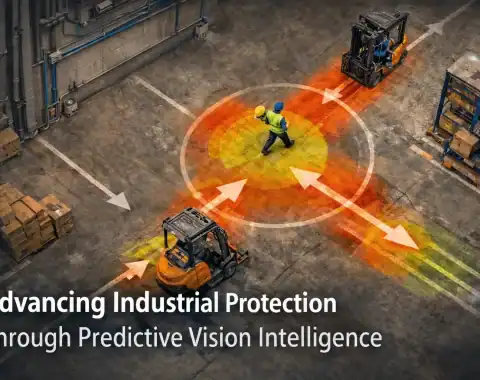
Industrial areas such as loading docks, intersections, or warehouse corners are especially prone to accidents. AI-based high-risk zone heatmaps visualize these danger areas by tracking activity density and incident frequency. These insights allow safety teams to redesign layouts, adjust workflows, and implement targeted preventive measures.
The more data the system gathers, the smarter it becomes. Over time, it can recognize subtle risk patterns that human supervisors might overlook, helping businesses build safer, data-driven environments.
From Detection to Preemption
What sets today’s smart industrial safety systems apart is their ability to act before harm occurs. These systems integrate with preemptive accident prevention algorithms that learn from past incidents and automatically fine-tune safety responses.
For instance, if a certain pathway sees frequent close calls between forklifts and workers, the system can automatically increase alert sensitivity in that area. This approach transforms safety management from reactive correction to proactive protection.
Industrial Motion Analytics: Turning Data into Action
At the core of every AI-powered safety network lies industrial motion analytics, a system that converts motion data into actionable safety insights. It not only tracks how vehicles and workers move but also identifies inefficiencies and hidden risks within operations.
By connecting motion analytics to a centralized dashboard, supervisors can monitor overall site activity, evaluate safety performance, and implement continuous improvements. This data-driven feedback loop reduces human error and builds a sustainable culture of safety.
AI Collision Avoidance
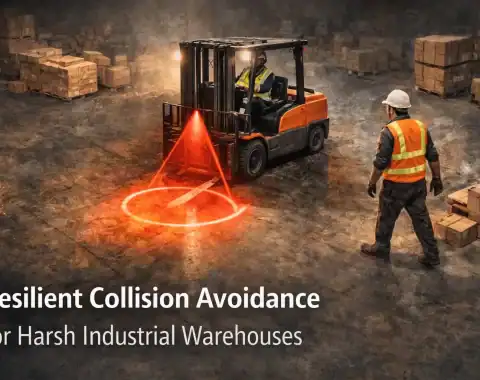
AI collision avoidance is a technology that uses artificial intelligence to detect and prevent potential accidents involving industrial vehicles and workers. By processing live data from cameras and sensors, it predicts movement patterns and automatically triggers warnings or braking. This ensures that forklifts, mining vehicles, and automated machinery operate safely even in confined or crowded environments. The system’s predictive nature reduces accidents, downtime, and maintenance costs, significantly improving workplace safety and operational reliability.
Industrial Safety Analytics
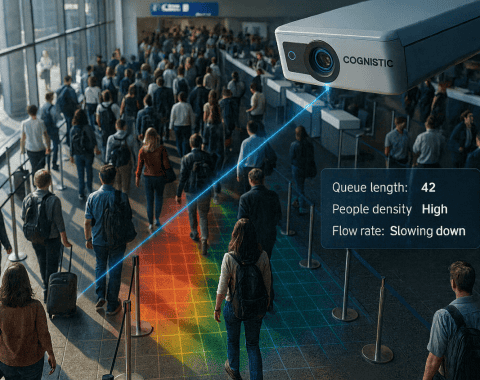
Industrial safety analytics transforms raw operational data into actionable insights that improve workplace protection. By continuously analyzing equipment performance, movement patterns, and environmental conditions, AI identifies risks that humans might miss. It helps managers pinpoint high-risk areas, measure compliance, and assess safety performance in real time. These insights guide informed decision-making, ensuring that every preventive action is based on accurate, data-backed evidence, creating safer and more efficient industrial environments.
Multi-Sensor Monitoring
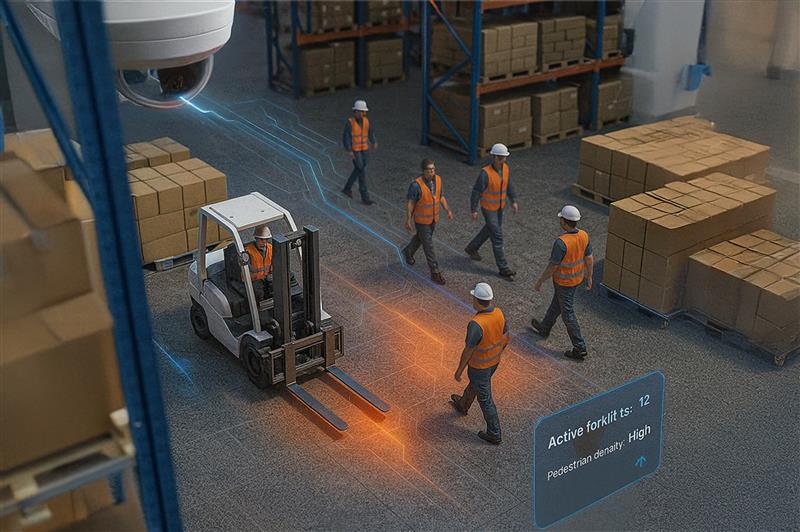
Multi-sensor monitoring integrates various sensing technologies such as 2D/3D cameras, LiDAR, radar, and ultrasonic sensors into one cohesive safety network. This fusion allows systems to capture a comprehensive view of the environment, overcoming limitations of individual sensors. By combining visual, spatial, and motion data, the system ensures accurate detection of obstacles, people, and machinery. The result is enhanced situational awareness, precise localization, and faster safety responses, making it a vital component of next-generation industrial safety frameworks.
Real-Time Predictive Safety
Real-time predictive safety uses AI algorithms to anticipate risks before they turn into incidents. It continuously analyzes sensor data, movement behavior, and operational conditions to forecast collisions or hazardous events. When a potential risk is detected, the system automatically alerts supervisors or intervenes directly. This proactive approach prevents downtime, ensures worker protection, and maintains compliance with safety standards. Predictive safety transforms reactive safety models into intelligent, prevention-driven systems that save lives and optimize performance.
Industrial Automation Safety
Industrial automation safety focuses on protecting people and assets in automated environments. As robotics, AGVs, and autonomous vehicles become more common, AI-driven safety systems ensure these technologies operate without endangering human workers. Automation safety frameworks combine real-time data, multi-sensor monitoring, and machine learning to manage interactions between humans and machines seamlessly. This integration enhances reliability, reduces operational hazards, and supports sustainable, zero-incident industrial growth.
Toward Predictive and Autonomous Safety Systems
As AI continues to evolve, the next frontier lies in autonomous safety decision-making. Future systems will not just alert or stop; they’ll coordinate multiple machines to respond intelligently in real time.
With multi-sensor safety systems and AI collision avoidance technologies advancing rapidly, the dream of accident-free industrial environments is no longer far off.
Discover how Cognistic’s Vision AI suite, including Mantis IV, is redefining predictive safety across industries.
Final Thought
Industrial safety is entering a new era defined by prediction, prevention, and precision. By using multi-sensor safety systems, real-time collision prediction, and high-risk zone heatmaps, organizations can prevent accidents before they happen and make workplaces more secure.
Cognistic is leading this transformation, providing intelligent safety technologies that empower industries to create smarter, safer, and more efficient workspaces.
FAQs
- What is a multi-sensor safety system?
It’s a network that combines data from multiple sensors to detect risks and prevent collisions in industrial environments.
- How do high-risk zone heatmaps improve safety?
They show areas where accidents are most likely to occur, allowing safety teams to take targeted preventive action.
- What does real-time collision prediction mean?
It’s an AI process that forecasts potential collisions by analyzing movement patterns and distances between people and machines.
- Can AI systems completely replace human supervision?
Not entirely. AI enhances human awareness and response, but works best when combined with trained supervision.
- Why is Cognistic considered a leader in industrial AI safety?
Cognistic develops advanced AI-driven safety technologies designed to predict risks, prevent accidents, and create safer work environments.