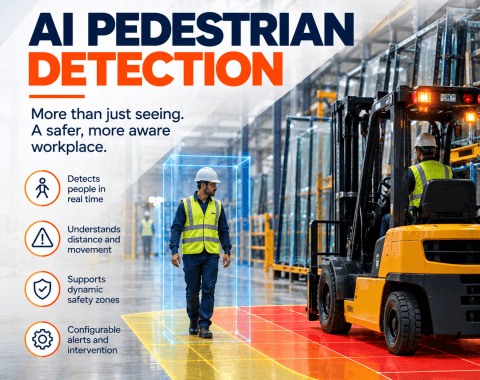
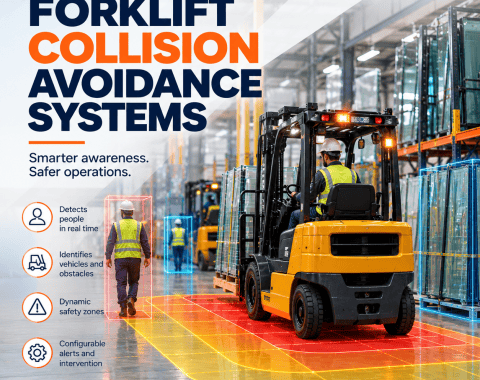
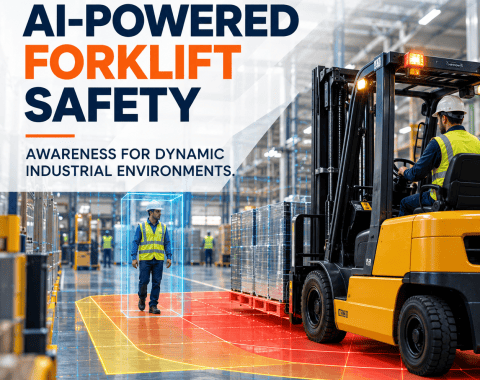
Forklift operators do not always have an uninterrupted view of the area around their vehicles. Vehicle structures, carried loads, shelving, tight intersections, and busy operating environments can all restrict visibility. These limits make blind spots one of the recurring concerns in material-handling operations.
A blind spot is an area that an operator cannot see adequately from the operating position at a particular moment. It can change when a load is raised, when a vehicle turns, or when a pedestrian moves behind an obstruction. Visibility challenges may affect both forward and reverse movement, depending on the forklift and task.
Why conventional measures remain important
Driver training, safe speeds, horns, mirrors, signage, marked pedestrian lanes and physical segregation are foundational controls. They help establish expected behaviors and manage traffic. However, each measure has limitations. A mirror depends on angle and attention. A warning sign cannot identify a person who unexpectedly enters a vehicle route. A horn relies on other people hearing it and responding appropriately.
Why additional awareness can help
Camera-based and sensor-based assistance technologies may provide information about defined zones near a moving vehicle. AI-powered systems can distinguish certain categories of detected objects, including people, while spatial sensing may help determine relative distance and position. Used appropriately, these capabilities can help operators become aware of some situations that might otherwise be overlooked.
Can technology remove blind spots entirely?
No. A responsible technology assessment should not assume total visibility or guaranteed detection. Physical obstructions, sensor placement, lighting and environmental conditions can affect performance. The objective is to reduce relevant information gaps and improve awareness within a validated operating envelope—not to suggest an operator can stop following safe procedures.
What should a warehouse assess?
Walk the site and identify where vehicles and pedestrians interact. Document intersections, loading areas, narrow aisles, tall loads, reversing tasks and routes near fixed assets. Review existing traffic controls and near-miss information. Then decide whether additional detection, warnings or other measures could address the specific scenarios you identified. Test any selected solution in representative conditions and regularly review its performance.
How Cognistic contributes
Mantis IV is Cognistic’s on-vehicle Vision AI collision-avoidance solution. Its AI and 3D sensing approach is relevant for facilities exploring additional detection and spatial awareness around forklifts and other industrial vehicles. Deployment scope and optional intervention features must be confirmed for the application.
A strong forklift safety program never depends on one layer of protection. It combines layout, procedures, training, and practical technology that helps teams understand risk.
Explore Cognistic’s forklift safety solutions:https://cognistic.ai/mantis-iv/