Introduction
Airports operate within narrow margins of timing and capacity. Passenger flow can shift rapidly due to schedule changes, staffing constraints, or unexpected disruptions. When visibility is limited, small deviations quickly escalate into congestion, delayed processing, and operational strain.
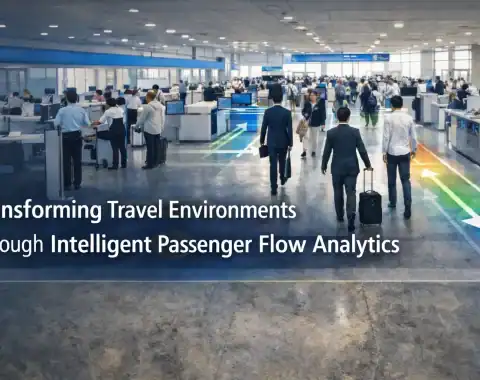
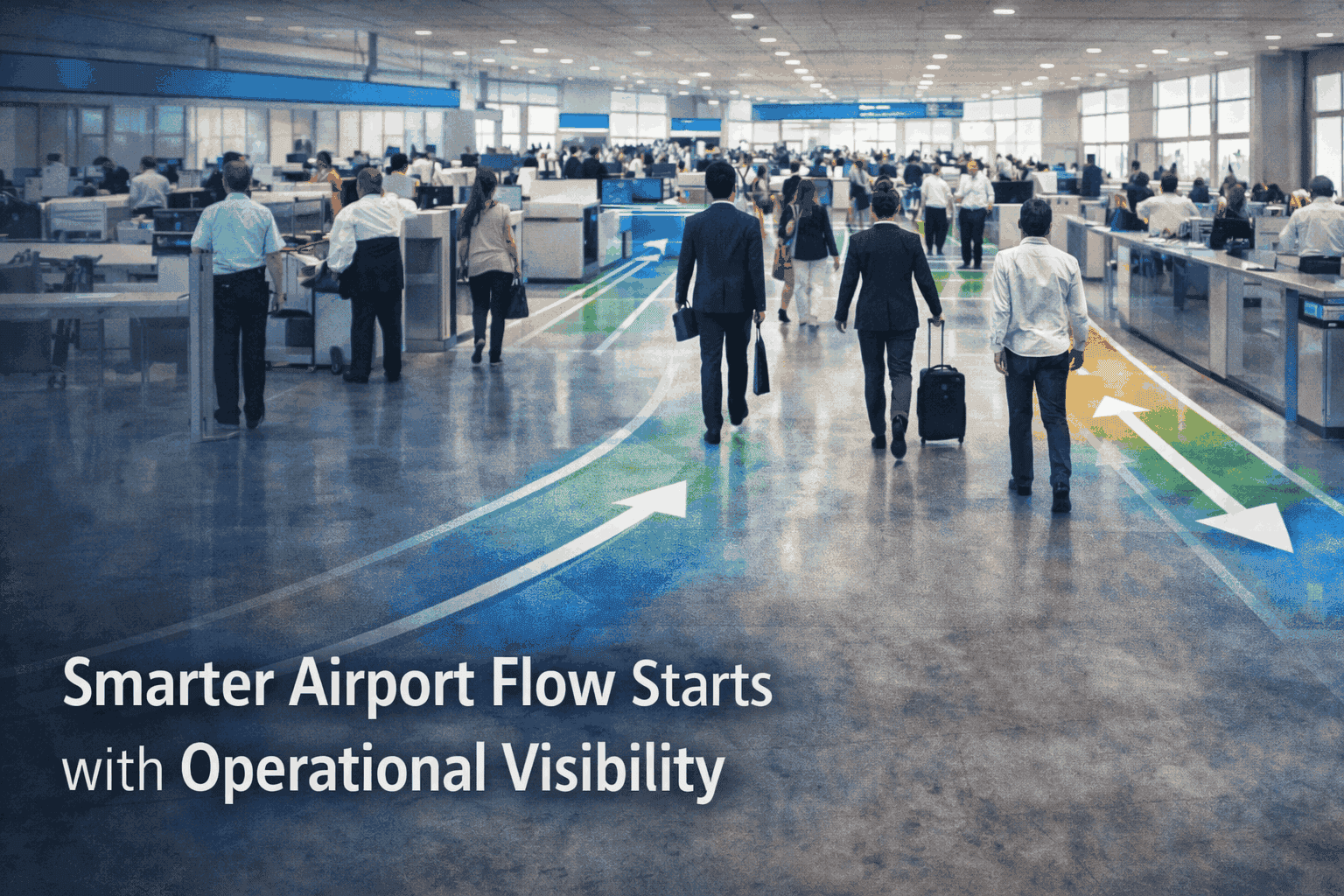
To maintain control in these conditions, airports are increasingly adopting Vision AI–driven flow intelligence. CONDOR, Cognistic’s platform for real-time passenger movement analytics, provides operations teams with continuous awareness of how traffic evolves across terminals—enabling timely, informed intervention before bottlenecks form.
Why Bottlenecks Persist Even in Well-Planned Airports
Airport operations involve multiple parallel processes—check-in, security, boarding, and transfers—often managed by different stakeholders. Even with careful planning, imbalances emerge when passenger volume shifts faster than resources can adapt.
Common contributors include:
- Delayed flight releases into shared areas
- Temporary staffing gaps at checkpoints
- Weather-driven schedule compression
- Queues extending into circulation paths.
- Higher processing time for specific traveler groups
Without real-time insight, these conditions remain unnoticed until service levels degrade.
Passenger Flow Analytics as a Foundation for Control
Operational teams do not lack experience; they often lack live, objective flow data. CONDOR’s Vision AI–based passenger analytics address this gap by continuously analyzing movement speed, density, and direction across terminal zones.
The system provides visibility into:
- Evolving congestion patterns
- Real-time queue growth
- Emerging pressure points across terminals
- Areas requiring intervention before delays become visible to passengers.
This level of situational awareness cannot be achieved through manual observation alone.
Real-Time Alerts That Enable Timely Decisions
Awareness must be paired with responsiveness. CONDOR issues real-time congestion and threshold alerts when flow conditions approach predefined operational limits.
These alerts support decisions such as:
- Reallocating staff to high-impact zones
- Opening or balancing processing lanes
- Adjusting passenger routing and signage
- Coordinating boarding pace with airlines
Rather than reacting after congestion forms, teams are guided by early signals that preserve stability.
Reducing Operational Stress Across the Terminal
When passenger flow is actively managed, both staff and traveler’s benefit. Clear visibility reduces last-minute interventions and crisis management.
Operational benefits include:
- More predictable queue behavior
- Improved workload balance for staff
- Fewer escalations during peak periods
Passengers experience smoother transitions, clearer guidance, and fewer perceived delays—without disruption to their journey.
Using Flow Intelligence for Long-Term Planning
Beyond daily operations, CONDOR provides historical flow analytics that support strategic planning. Continuous data reveals:
- Recurring congestion windows
- Staffing alignment opportunities
- Layout inefficiencies
- Seasonal demand shifts
This insight enables airports to plan proactively rather than relying on assumptions or anecdotal feedback.
Final Thoughts
Effective airport operations depend on visibility, timing, and informed action. By transforming live movement into operational intelligence, CONDOR enables airports to manage flow with precision and confidence.
Cognistic supports airports with deployment-ready Vision AI solutions that enhance control, resilience, and efficiency—ensuring terminals remain functional even as conditions evolve.
Frequently Asked Questions (FAQs)
- How does CONDOR improve airport flow management?
CONDOR provides real-time Vision AI analytics on passenger movement, helping teams identify congestion early and respond before service levels are affected.
- Is CONDOR compatible with existing airport infrastructure?
Yes. CONDOR integrates with existing camera systems and operates without disrupting airport operations.
- Does CONDOR use personal or biometric data?
No. CONDOR analyzes movement patterns anonymously and does not identify or track individuals.
- Can CONDOR scale across large and medium airports?
Yes. The platform adapts to different terminal layouts, traffic volumes, and operational models.
- Who uses CONDOR insights within the airport?
Operations managers, terminal supervisors, and planning teams use CONDOR to support real-time decisions and long-term optimization.